


Artificial intelligence is no longer just a set of tools—it’s becoming a living layer in how the world works. Yet its promise comes with an undeniable cost: vast energy demands, growing infrastructure footprints, and deep questions about how humans and machines will share the future of work.
To create an AI era that truly serves people and planet, we need innovation that’s not only intelligent, but responsible—innovation that reimagines how energy is produced, how systems are governed, and how people are empowered. This post explores how we can design that balance between technology, sustainability, and humanity.
Table of Contents
The Energy Burden — and How We Flip It
In “We must harness technology for a greener AI energy future,” the World Economic Forum highlights a crucial shift: technological convergence. This means linking advances in AI, renewable energy, and smart infrastructure to build a sustainable digital foundation.
Key innovations shaping this future include:
- AI-powered energy optimization – Predicting energy demand, balancing grids in real time, and minimizing waste.
- Carbon-aware computing – Scheduling compute tasks when renewable power is abundant.
- Reimagined infrastructure – Locating data centers near renewable sources, recycling waste heat, and using intelligent cooling systems.
These aren’t minor tweaks—they represent a new kind of digital infrastructure where AI itself helps power the clean-energy transition.
Cutting AI’s Environmental Impact in Practice

WEF’s “How to cut the environmental impact of your company’s AI use” offers a hands-on roadmap for organizations aiming to innovate sustainably.
Key steps include:
- Measure relentlessly – Track AI’s energy, water, and carbon metrics.
- Design for efficiency – Use model-optimization techniques such as pruning, distillation, and quantization.
- Adopt innovative hardware and cooling – Next-gen chips and modular designs can cut emissions drastically.
- Align compute with renewables – Adopt carbon-aware schedulers.
- Build a responsible culture – Sustainability isn’t a project; it’s a mindset that must guide procurement, governance, and partnerships.
The innovation here isn’t just technological—it’s organizational. Companies that weave sustainability into their AI strategies don’t just reduce harm; they build future-ready resilience.
AI and the Workforce: Innovating Around Humans

While the energy conversation focuses on machines, the human dimension of AI is equally urgent. The World Economic Forum’s ongoing research on the Future of Work shows that AI isn’t just automating—it’s transforming how we learn, collaborate, and create.
Key takeaways from WEF’s 2025 insights include:
- Innovation starts with people. The most adaptive teams pair AI proficiency with human creativity, empathy, and judgment.
- Reskilling is innovation in action. Organizations investing in AI literacy, ethics, and systems thinking are cultivating the workforce of the future.
- Collaboration between humans and AI—not substitution—is the real productivity multiplier.
As WEF puts it, “The future of work will be defined less by what AI replaces, and more by what humans choose to build with it.”
Innovation here means creating work environments that encourage curiosity, continuous learning, and purpose.
Integrating Energy, Responsibility and Innovation

Sustainable AI isn’t a siloed goal. It lives at the intersection of:
- Clean energy infrastructure – Designing AI systems that run on renewables.
- Responsible governance – Embedding sustainability and ethics into AI policy.
- Human-centered innovation – Focusing on workforce inclusion, creativity, and long-term growth.
When these three pillars align, innovation becomes regenerative—it gives back more than it consumes.
To build this, organizations can:
- Set clear sustainability KPIs for AI initiatives.
- Use transparent reporting on compute use and emissions.
- Create cross-disciplinary innovation teams combining AI, energy, and HR.
- Reward sustainable invention through internal recognition and incentives.
Checklist: Innovating Sustainably with AI
1. Audit your AI footprint – Measure energy, water, and emissions.
2. Optimize your models – Use the smallest, most efficient architectures.
3. Adopt carbon-aware computing – Match workloads to renewable availability.
4. Switch to green power – Ensure data centers run on renewables.
5. Upskill continuously – Combine technical and human-centric learning.
6. Embed sustainability into AI procurement and reporting.
Conclusion: Building an Intelligent, Regenerative Future
Sustainability and innovation are not opposing forces—they are now inseparable. The next generation of AI leaders will be those who design intelligence that regenerates, not depletes.
By aligning energy innovation, responsible governance, and human potential, we can ensure AI becomes a force not just for efficiency, but for planetary and social renewal.
The challenge is immense—but so is our capacity to innovate responsibly.
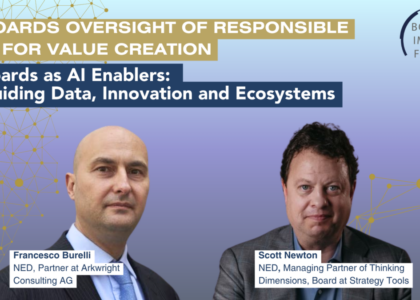
To learn more about how boards and leaders can drive this transformation, you are warmly welcome to join the Boards Impact Forum’s upcoming webinar — “Reimagining the Future: How Boards Can Leverage AI for Sustainable Value”, on October 15, 2025, 08:00–09:30 CET (online).
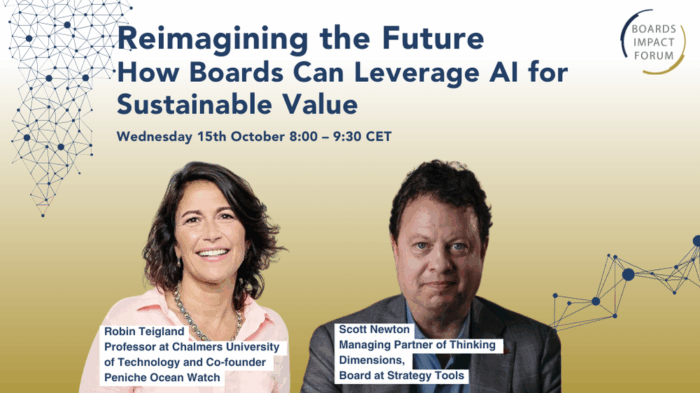
Confirmed speakers:
- Robin Teigland, Professor at Chalmers University of Technology and Co-founder of Peniche Ocean Watch
- Scott Newton, Managing Partner at Thinking Dimensions and Board Director at Strategy Tools
Moderated by: Liselotte Engstam and Fernanda Torre, Boards Impact Forum
Join us to explore how boards can unlock AI’s potential while ensuring responsible governance and sustainable value creation.
Learn More
At Boards Impact Forum, we remain committed to supporting NEDs in this evolving landscape, ensuring sustainability and governance go hand in hand.
Webinars, Peer Exchanges and Events
Check our upcoming events, all with NED Guest Speakers and Peer Exchange:
- October 15: Reimagining the Future
- November 20: Boards Navigating the Green Transition
Board Programs
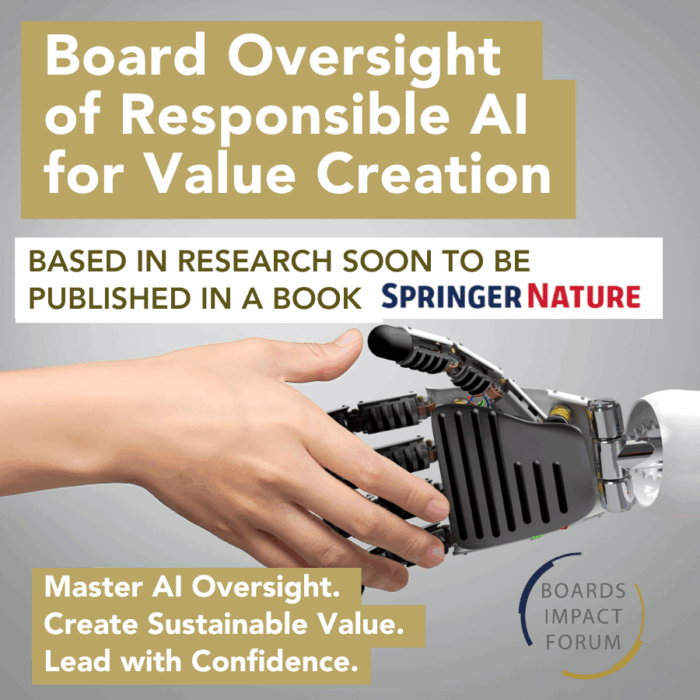
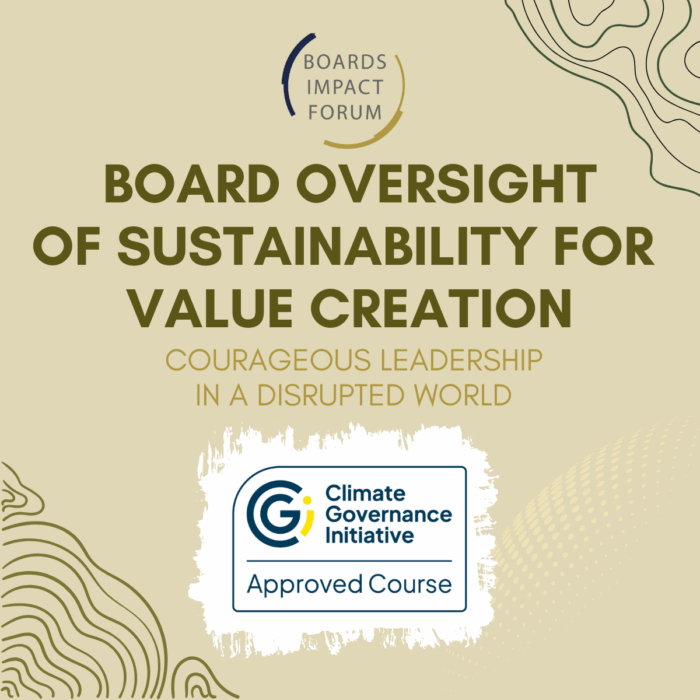
Sign up for our programs:
Become a Member
Want to be part of the transition? Become a member of Boards Impact Forum and shape the future of governance.
About Boards Impact Forum and the blogpost
This blogpost is also shared at the blog of of Digoshen, www.digoshen.com.



Recent Comments