


by Fernanda Torre
When the United Nations Environment Assembly (UNEA-7) convenes this December in Nairobi, artificial intelligence (AI) will be a major topic. Not just for its promise, but also for its growing environmental footprint. A recent UNEP article highlights the double-edged nature of AI. It is a powerful enabler of innovation for sustainability, but also a new source of environmental pressure. For boards, this is not a future concern. It is a strategic responsibility, here and now.
Table of Contents
The Wildcard of Our Time
AI is already helping tackle the triple planetary crisis of climate change, biodiversity loss, and pollution. It is being used to monitor methane emissions, optimize supply chains, design regenerative agriculture, and reduce waste in global operations. The potential is enormous.
At the same time, AI’s environmental footprint is growing. Data centers powering AI models consume vast amounts of electricity, water, and raw materials. According to UNEP, AI infrastructure could soon consume six times more water than the entire country of Denmark. In Ireland, AI may account for 35 percent of national energy use by 2026. The International Energy Agency estimates that a single request to ChatGPT uses ten times more electricity than a basic Google search.
These pressures add to a larger pattern of environmental impact from electronics and digital infrastructure. Data centers produce e-waste, rely on rare earth minerals, and contribute to emissions through high energy demand. The environmental cost of AI must be governed with care.
AI and Climate: A Converging Reality
In a recent article for the Financial Times, we wrote: “Artificial Intelligence and climate change are not parallel disruptions. They are converging forces that will shape the next decade of business.” This convergence creates not just risk, but an unprecedented opportunity for transformation. https://climate-governance.org/ai-and-climate-strategic-frontier/
Boards must lead in steering AI as part of broader sustainability strategies. This is not only about protecting the environment. It is about creating future-fit business models, systemic innovation, and long-term value.
Two Sides of the AI Opportunity
AI is a force for good when deployed responsibly. It can:
- Optimize energy use in real time
- Accelerate climate-positive urban planning
- Help investors direct capital into sustainable assets
- Support circular economy transitions in materials and manufacturing
Yet the technology also brings new risks. It consumes scarce resources, introduces social and ethical concerns, and may enable harmful rebound effects such as increased emissions from autonomous mobility. These tensions cannot be ignored.
Boards must see AI as a dual challenge. It is both a source of innovation and a driver of new responsibilities.
Materiality as a Compass for Innovation
Too often, AI initiatives are disconnected from corporate priorities. They begin as tech experiments without a business case or strategic link.
Materiality assessments can change this. Traditionally used for sustainability reporting, double materiality assessments are now a vital governance tool. They help boards identify where AI and sustainability intersect with business value, customer needs, and stakeholder expectations.
A clear materiality map anchors AI strategy in what matters most. It reveals overlooked risks, unlocks new areas for growth, and ensures resources are focused on high-impact outcomes.
Where AI Creates Business and Climate Advantage
Some companies are already moving with purpose:
- Ørsted uses predictive AI to optimize wind farm performance and reduce downtime
- Maersk applies AI across operations to cut emissions and boost logistics efficiency
- IKEA uses AI to reduce food waste, optimize transport, and track supply chain sustainability
These are not isolated projects. They reflect board-level commitment to align digital transformation with sustainability goals. They show how AI, when integrated strategically, creates hard-to-copy advantages.
Three Priorities for Boards
In our forthcoming book AI Leadership for Corporate Boards – Leading Responsible AI for Value Creation, we outline three critical areas where board oversight makes the greatest difference:
1. Set the Foundation
Use materiality and foresight to identify where AI can solve real problems and deliver value. Link AI to strategic goals and stakeholder needs from the beginning.
2. Balance Supervision with Innovation
Boards must ensure responsible AI use, addressing risks like bias, liability, and cybersecurity. At the same time, they should empower management to experiment and innovate. The right balance builds trust and progress.
3. Build Strategic Advantage
Combine AI with sustainability to create differentiated value. Focus on unique data, trusted relationships, resilient supply chains, and transparent ecosystems. These advantages will be crucial as global access to technology, talent, and resources becomes more complex.
Aligning the Board Through Education
Boardrooms are often composed of individuals with different perspectives on AI and sustainability. Without a shared baseline, discussions can become fragmented or superficial.
Joint education is one of the most effective tools to align the board. When directors explore AI and sustainability together, they create space for vulnerability, mutual learning, and strategic clarity.
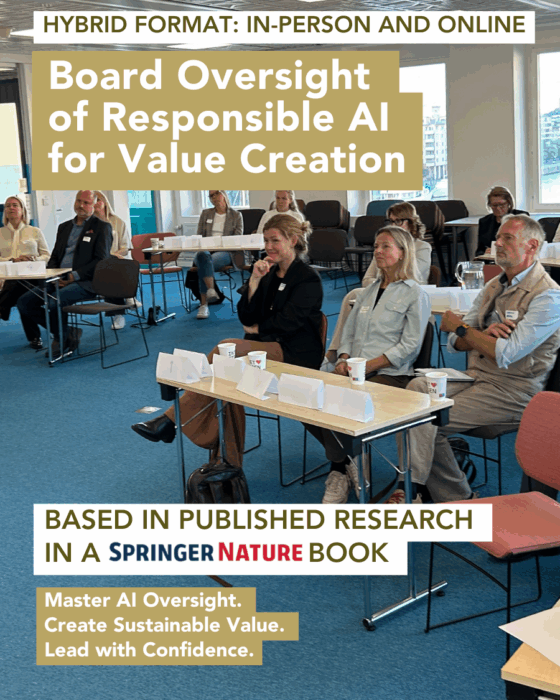
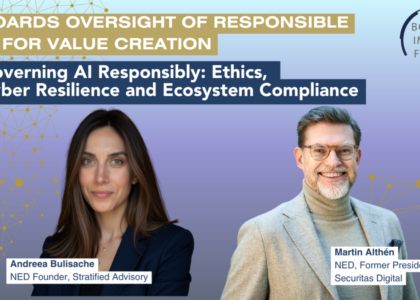
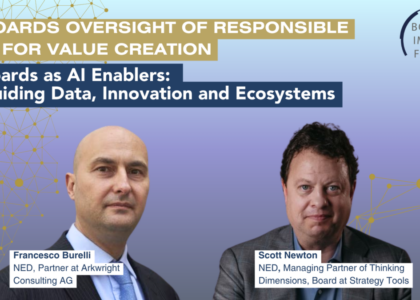
That is why Boards Impact Forum offers tailored programs on Board Oversight of Responsible AI for Value Creation and Board Oversight of Sustainability for Value Creation. These trainings help directors develop a shared language, engage in strategic dialogue, and shape future-ready governance.

A Board-Level Call to Action
AI is here to stay. So is the climate crisis. Their intersection will define how businesses grow, how they compete, and how they are perceived by customers, investors, and regulators.
Boards that act now to integrate AI and sustainability into their oversight and strategy will be better positioned to lead. Not just in surviving disruption, but in shaping the future.
The time to lead is now.
Explore Further
📘 Coming November 2025
AI Leadership for Corporate Boards – Leading Responsible AI for Value Creation, By Liselotte Engstam, Fernanda Torre, and Robin Teigland, With contribution from Stanislav Shekshnia, published by Springer Nature
🎓 Learn More & Register
Board Oversight of Responsible AI for Value Creation: New cohort beginning soon – early bird pricing available for a limited time – 50% off with the code BIF50Bird.



Recent Comments